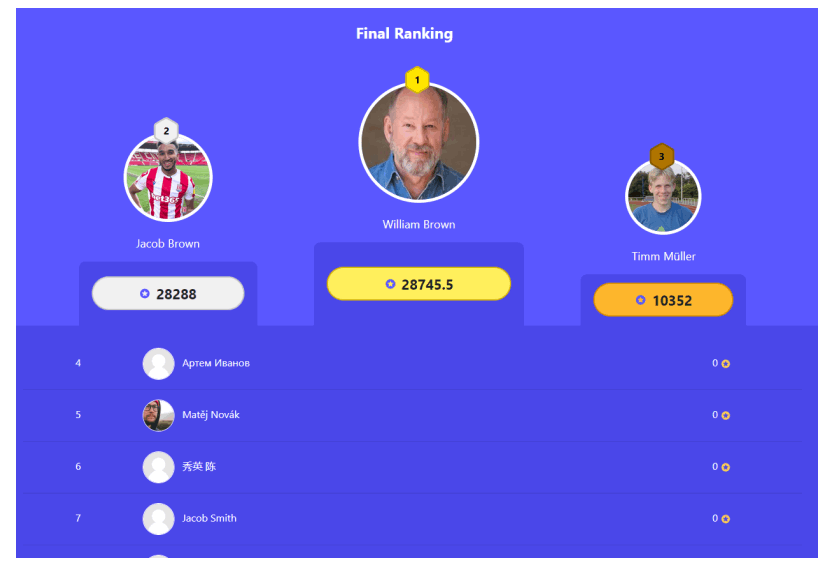
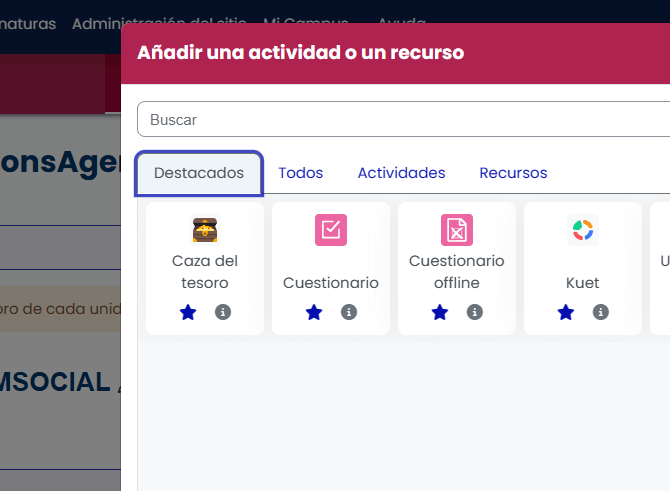
Turn editing on in your course, add a KUET activity and enter its name. Configure grading, individual or group participation, and completion.
Grading options are: no grading (default), highest session grade, average of sessions, first session grade or last session grade. An ungraded activity can still display points during play and in reports, but does not send them to the gradebook.
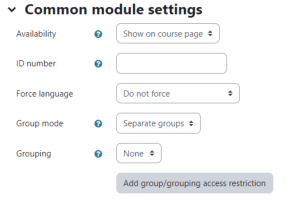
Select “No groups” for individual participation. To play in teams, enable group mode and select a grouping in the activity or in each session.
Create the groups and grouping beforehand. Each participant must belong to exactly one group in that grouping; duplicate memberships and empty groupings produce errors. KUET automatically creates a group such as “Kuet team Sdxpz” for a participant without a group. Review the teams in the session summary.
The first answer from a member counts for the whole team. All members share the same score, even if they do not all connect.
To send a grade to the gradebook, the activity must be graded and at least one graded session must have ended.
Aggregation follows the method chosen for the activity. Podium rewards accuracy and speed; inactive and race modes use question scores without a speed bonus. Groups use the same calculation, with all members receiving the same grade.
Grading KUET: choose an assessment strategy, decide which sessions count and understand the final grade.
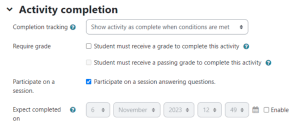
The “Participate in a session by answering questions” condition marks the activity complete when a student has participated and answered questions in a session.
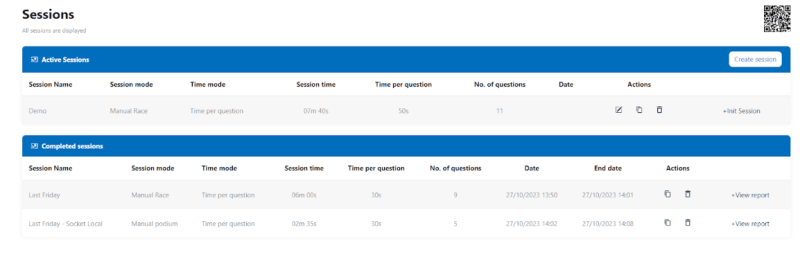
Use the dashboard to create, start, duplicate, configure and delete sessions, review reports and detect configuration errors or scheduling conflicts. An activity can contain multiple sessions, but only one can be running at a time.
The dashboard requires mod/kuet:managesessions and separates active and completed sessions.
Active: waiting to start or running. Sessions can only be edited or deleted before they start; they can be duplicated at any time. A copy adds a suffix to the name and does not retain start and end dates, which must be configured again.
Completed: finished sessions with access to their reports. Duplicate one to run it again, or delete it. Deleting a session removes its associated data and may affect grades; you do not need to delete the original to use a copy.
The dashboard shows the mode, timing, question count and dates. Resolve warnings before starting:
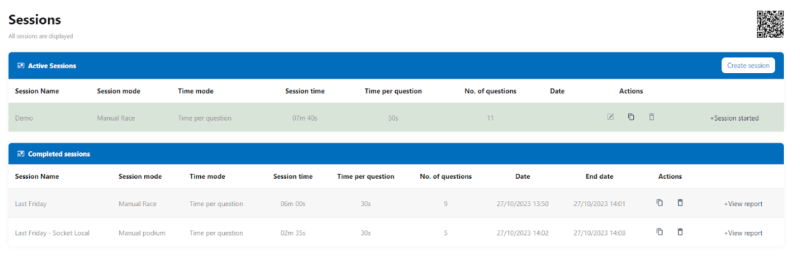
Green: a running session cannot be edited or deleted and prevents another session from starting.
Light blue: unfinished editing; complete all three wizard steps.
Dark grey: no questions; add at least one.
Red: overlapping dates; adjust the time windows.
A scheduled session blocked by another running session waits until it can start. Several warnings may appear together.
Always complete all three steps: general settings, questions, and summary with confirmation. The name must be unique within the activity, including completed sessions.
Choose progression, game mode, grading, and options for anonymous answers, feedback, rankings and timing. A session is not ready to start until you select “Finish” on the summary page.
Combine manual or scheduled progression with inactive, podium or race mode: six session options. Manual modes require a configured WebSocket. Compare modes and scoring.
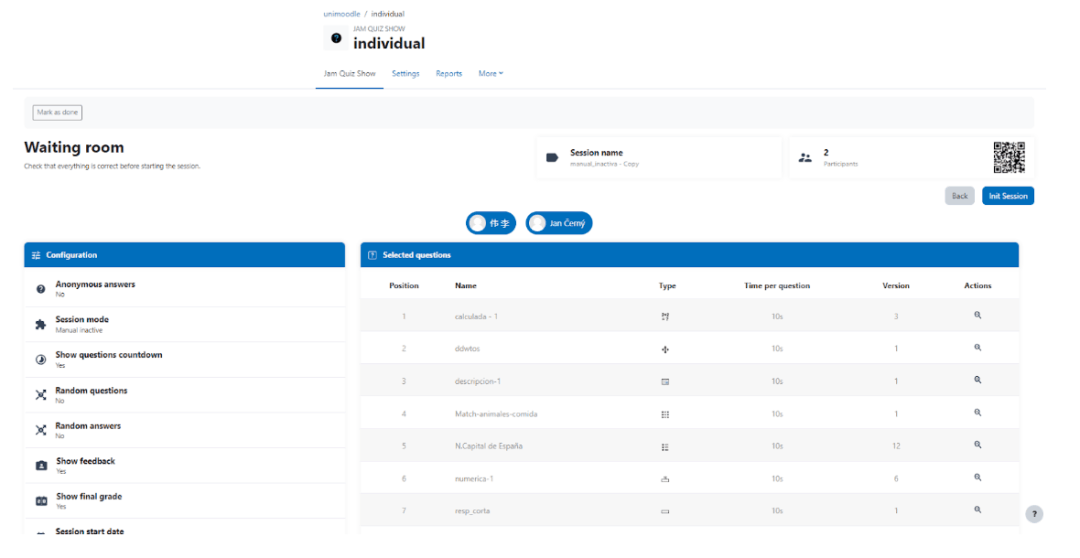
The teacher starts the session and enters the waiting room first. Here they can preview questions, display the QR code and check connected participants’ names, avatars and count. Students wait until the teacher launches the first question.
“Back” cancels the start and disconnects participants only while still in the waiting room, before questions begin. “Start session” displays the first question to everyone.
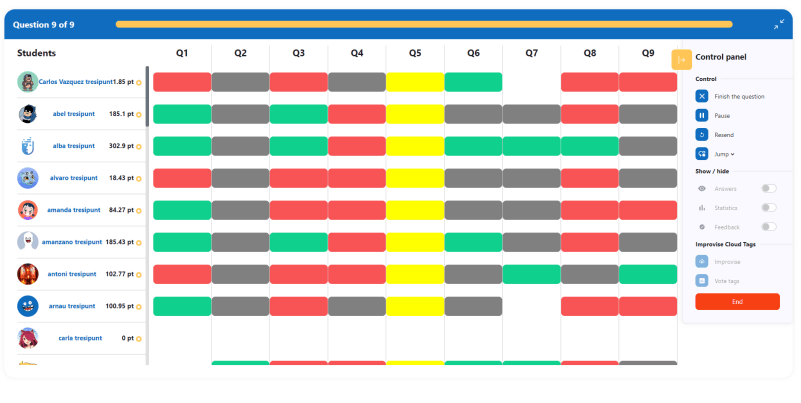
The teacher then controls progression and can show answers, statistics and feedback after each question. Read about session controls.
Set a unique name, session mode and whether it contributes to the grade. You can enable anonymous answers, a countdown, interim and final rankings, and general and grade-based feedback.
Random question order is available only in scheduled progression. In manual progression, shuffled answers appear in the same order for everyone because the teacher generates the question.
For scheduled progression, enable automatic start and set valid, non-overlapping start and end dates. Without dates, the teacher opens and closes the session. Choose no time limit (inactive only), total time divided among questions, or per-question timing. Read the timing rules.
Select a question bank category, choose questions and add them before changing category to avoid losing the selection. Drag questions to reorder them and check their version.
Use the pencil to adjust individual timing in per-question time mode, or enable “Ignore correct answers and grading” to exclude a question from assessment. The bin removes a question from the session.
Use the magnifying glass to test how students will see and answer each question, including feedback. Check HTML content, MathJax formulae and embedded external elements in particular.
Review the settings, questions and teams in the summary and select “Finish”. A session with no questions or unfinished editing cannot start.
The interface adapts to mobile devices, but a larger screen is more comfortable for leading manual sessions. Test questions before starting, especially those containing HTML or external applications. Continue to the guide to playing and leading sessions.